
dakshina murthy stotram telugu pdf
Dakshina Murthy Stotram: A Comprehensive Guide
Discover the sacred Dakshina Murthy Stotram in Telugu, readily available as a PDF download from sources like Vignanam.org. This resource offers simplified Telugu text,
enhancing accessibility for devotees seeking spiritual enlightenment through this powerful hymn.
Dakshina Murthy, meaning “Teacher facing South,” is a significant form of Lord Shiva, revered as the ultimate guru and embodiment of knowledge. He is often depicted seated under the Banyan tree, surrounded by disciples, imparting wisdom through silent transmission. This serene image represents the profound truth that true knowledge arises from within, guided by a realized master.
The Dakshina Murthy Stotram, a hymn composed by Adi Shankaracharya, beautifully encapsulates the essence of this divine teacher. For Telugu-speaking devotees, accessing this stotram in their native language is profoundly meaningful. Fortunately, resources like Vignanam.org provide the Dakshina Murthy Stotram in Telugu, often available as a convenient PDF download.
These Telugu PDF versions frequently feature simplified transliteration, making the verses accessible even to those less familiar with traditional Sanskrit pronunciation. The availability of the stotram in Telugu ensures that a wider audience can connect with its powerful verses and experience the blessings of Dakshina Murthy. This accessibility fosters deeper devotion and understanding of Advaita Vedanta principles.
The Significance of Dakshina Murthy Stotram
The Dakshina Murthy Stotram holds immense significance for seekers of knowledge and spiritual liberation. Composed by Adi Shankaracharya, it’s a powerful hymn that praises Lord Shiva as the ultimate teacher, embodying pure consciousness and wisdom. Chanting this stotram is believed to remove ignorance, bestow clarity of mind, and facilitate self-realization.
For Telugu devotees, the availability of the stotram in their language, often as a readily downloadable PDF from sites like Vignanam.org, amplifies its impact. The Telugu PDF versions often present the verses with simplified transliteration, making them accessible to a broader audience. This allows for accurate pronunciation and deeper contemplation of the stotram’s meaning.
The stotram’s verses highlight Dakshina Murthy’s silent teaching, emphasizing the importance of introspection and self-discovery. Accessing the Dakshina Murthy Stotram in Telugu PDF format enables devotees to connect with this profound wisdom on a personal level, fostering a stronger spiritual practice and a deeper understanding of Advaita Vedanta philosophy.
Origins and Historical Context
The Dakshina Murthy Stotram’s origins trace back to the 8th century CE, attributed to the profound philosopher and spiritual leader, Adi Shankaracharya. He composed this hymn while meditating under a banyan tree, embodying the form of Dakshina Murthy – Lord Shiva as the ultimate teacher. The stotram arose from a spontaneous realization of the divine’s inherent wisdom and the path to liberation.
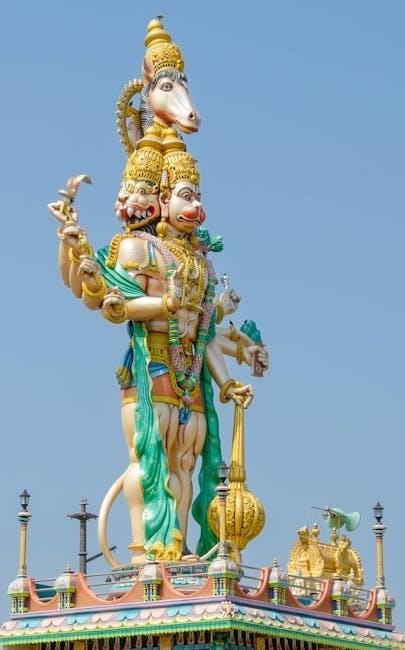
Historically, the stotram was initially transmitted orally, passed down through generations of disciples. With the advent of writing and digital technology, it became available in various scripts, including Telugu. Today, finding a Dakshina Murthy Stotram in Telugu PDF format is relatively easy, thanks to resources like Vignanam.org, which preserves and disseminates spiritual literature.
The Telugu PDF versions often reflect a commitment to accessibility, utilizing simplified transliteration to aid pronunciation and understanding. This ensures the stotram’s timeless wisdom continues to reach and inspire devotees, maintaining its relevance across centuries and linguistic boundaries.
The Author of Dakshina Murthy Stotram – Adi Shankaracharya
Adi Shankaracharya, a towering figure in Advaita Vedanta philosophy, is revered as the composer of the Dakshina Murthy Stotram. Born in Kalady, Kerala, around 788-820 CE, he traversed the Indian subcontinent, revitalizing Hinduism through intellectual debates and establishing monastic institutions.
His profound understanding of Brahman, the ultimate reality, is beautifully encapsulated within the stotram. The story recounts how, while teaching, his disciples requested him to exemplify the ideal teacher. Shankaracharya then turned to a young boy under a banyan tree, embodying the serene and silent wisdom of Dakshina Murthy – Shiva as the cosmic teacher.
The availability of the Dakshina Murthy Stotram in Telugu PDF format allows wider access to Shankaracharya’s teachings. Resources like Vignanam.org provide these texts, often in simplified Telugu script, ensuring the stotram’s message of self-realization reaches a broader audience. His legacy continues through this powerful hymn and its accessible digital forms.
Structure of the Stotram: Verses and Meaning
The Dakshina Murthy Stotram comprises ten verses, each a potent contemplation on the nature of reality and the guru-shishya parampara. Each verse, available in Telugu PDF versions from sites like Vignanam.org, builds upon the previous, progressively revealing the profound wisdom of Shiva as the ultimate teacher.
The verses begin with invocations establishing the foundational principles of Brahman and the importance of a guru. They then vividly depict Dakshina Murthy seated beneath the banyan tree, surrounded by disciples, embodying silent instruction. Subsequent verses delve into the illusory nature of the world and the path to liberation.
The Telugu translations, often presented in Sarala Telugu with simplified anusvaras, enhance understanding. The stotram’s structure isn’t merely poetic; it’s a carefully crafted guide to self-inquiry. Accessing the PDF allows for detailed study, enabling devotees to unlock the stotram’s layers of meaning and experience its transformative power.
The First Verse: Om Yo Brahmanam Vidhadhati Purvam
The inaugural verse, “Om Yo Brahmanam Vidhadhati Purvam,” sets the stage for the entire Dakshina Murthy Stotram. It invokes the primordial creator, Brahman, who initially manifested the universe. This verse, readily found within Telugu PDF versions available on platforms like Vignanam.org, establishes the divine origin of all existence.
The Telugu translation, often presented in a simplified script, clarifies that this Brahman is the source of both knowledge (Vedams) and their subsequent revelation. It’s a call to surrender to this ultimate reality, seeking refuge in the divine consciousness that permeates everything.
Studying this verse through a Telugu PDF allows for a deeper appreciation of the nuanced language and philosophical depth. It’s a foundational step in understanding the stotram’s core message: the realization of one’s true self as identical with Brahman. The verse prepares the seeker for the silent teachings of Dakshina Murthy.
The Second Verse: Om Mounavyakhya Prakatita Parabrahmatatvam Yuvanam
The second verse, “Om Mounavyakhya Prakatita Parabrahmatatvam Yuvanam,” describes Dakshina Murthy as a youthful teacher revealing the supreme truth (Parabrahmatatvam) through the power of silence. This profound concept is beautifully articulated in Telugu, and accessible through readily available PDF versions, such as those found on Vignanam.org.
The verse depicts Dakshina Murthy surrounded by enlightened sages (Brahmaniṣṭhaiḥ), emphasizing the transmission of wisdom. His youthful form symbolizes the timelessness of truth, while his silent exposition transcends the limitations of language. The Telugu PDF often includes transliteration and word-by-word meanings, aiding comprehension.
This verse highlights the importance of inner contemplation and the guru’s role in guiding the disciple towards self-realization. Studying the Telugu text within a PDF format allows for a focused and immersive experience, fostering a deeper connection with the stotram’s spiritual essence and the silent wisdom of Dakshina Murthy.
The Third Verse: Chitram Vatatarormule Vriddhaḥ Shiṣyā Gururyuvā
The third verse, “Chitram Vatatarormule Vriddhaḥ Shiṣyā Gururyuvā,” paints a vivid picture of Dakshina Murthy seated beneath the banyan tree. An aged disciple sits alongside a youthful guru, illustrating the timeless student-teacher relationship; This imagery is beautifully preserved in Telugu versions of the Dakshina Murthy Stotram, often available as convenient PDF downloads.
The verse emphasizes the guru’s silence (mounam) as a form of teaching, with the disciple’s doubts dissolving through understanding. Accessing the stotram in Telugu PDF format from resources like Vignanam.org allows for detailed study of the verse’s nuances, including transliteration and explanations.
The contrast between the old disciple and young guru symbolizes the eternal nature of knowledge. The Telugu PDF versions often present the text in simplified Telugu (సరళ తెలుగు), making it accessible to a wider audience. This verse underscores the power of silent transmission and the guru’s role in dispelling ignorance.
The Fourth Verse: Nidhe Sarvavidyānām Bhiṣaje Bhavarogīnām
The fourth verse, “Nidhe Sarvavidyānām Bhiṣaje Bhavarogīnām,” proclaims Dakshina Murthy as the treasure house of all knowledge and the physician for those suffering from the disease of worldly existence (samsara). Finding this verse within a Telugu PDF version of the Dakshina Murthy Stotram, such as those available on Vignanam.org, facilitates deeper contemplation.
This verse highlights the stotram’s curative power, offering liberation from the cycle of birth and death. Telugu PDFs often include transliteration, aiding correct pronunciation and understanding of the verse’s meaning. The simplified Telugu script (సరళ తెలుగు) used in some versions enhances readability.
Dakshina Murthy is revered as the ultimate guru, capable of healing spiritual ailments. Studying the verse in its original Telugu form, through a downloadable PDF, allows devotees to connect with its profound message. It emphasizes the guru’s role in providing the knowledge needed to overcome suffering and attain enlightenment.
The Fifth Verse: Om Namah Pranavarthaya Shuddhajñānekamūrtaye
The fifth verse, “Om Namah Pranavarthaya Shuddhajñānekamūrtaye,” offers salutations to Dakshina Murthy, embodying the pure form of knowledge and the essence of the sacred syllable Om (Pranava). Accessing a Telugu PDF of the Dakshina Murthy Stotram, like those found on platforms such as Vignanam.org, allows for focused study of this powerful verse.
This verse emphasizes the guru’s embodiment of pure consciousness and the transformative power of Om. Telugu versions, often presented in సరళ తెలుగు, simplify the script for easier reading and comprehension. The PDF format enables convenient access and offline study.
Devotees seeking spiritual growth can benefit from reciting and contemplating this verse. The Telugu PDFs frequently include transliteration, aiding correct pronunciation and deeper understanding of the verse’s meaning. It highlights the guru’s role in revealing the true nature of reality and guiding disciples towards self-realization.
The Sixth Verse: Chidhanāya Maheśāya Vaṭamūlanivāsine
The sixth verse, “Chidhanāya Maheśāya Vaṭamūlanivāsine,” praises Dakshina Murthy as the embodiment of pure consciousness (Chidhanaya), the great Lord (Maheśāya), and one who resides beneath the banyan tree (Vaṭamūlanivāsine). Finding a Telugu PDF version of the Dakshina Murthy Stotram, readily available on sites like Vignanam.org, facilitates focused study of this evocative verse.
This verse emphasizes the guru’s serene presence and connection to nature. Telugu PDFs often present the text in సరళ తెలుగు, simplifying the script for wider accessibility. The convenience of a downloadable PDF allows for repeated recitation and contemplation.
Devotees can deepen their understanding by studying the transliteration included in many Telugu PDFs, ensuring correct pronunciation. The verse highlights the guru’s role as a source of bliss and liberation, residing peacefully and imparting wisdom to sincere seekers. It underscores the importance of a tranquil environment for spiritual practice.
The Seventh Verse: Īśvaro Gururātmėti Mūrtibhedavibhāgine
The seventh verse, “Īśvaro Gururātmėti Mūrtibhedavibhāgine,” proclaims that the Lord (Īśvara), the Guru, and the Self (Ātmā) are not separate, but different manifestations of the same divine reality. Accessing the Dakshina Murthy Stotram in Telugu as a PDF, such as those found on Vignanam.org, allows for focused contemplation of this profound concept.
This verse emphasizes the non-dualistic nature of existence, a core tenet of Advaita Vedanta. Telugu PDF versions often include transliterations, aiding correct pronunciation and understanding. The availability of a downloadable PDF facilitates consistent study and memorization;
The verse highlights the guru’s role in revealing this truth, guiding disciples towards self-realization. Many Telugu PDFs present the text in సరళ తెలుగు, making it accessible to a broader audience. Studying this verse within the complete stotram, conveniently available in PDF format, deepens one’s appreciation of its significance.
The Eighth Verse: Anguṣṭhatarjanī Yogamudrā Vyājena Yoginām
The eighth verse, “Anguṣṭhatarjanī Yogamudrā Vyājena Yoginām,” describes Dakshina Murthy demonstrating the Yogamudrā – the gesture of the thumb and index finger – to yogis, signifying the union of individual consciousness with the universal Brahman. Finding a Telugu PDF version of the Dakshina Murthy Stotram, like those available on platforms such as Vignanam.org, allows for detailed study of this verse.

This mudrā symbolizes the realization of oneness, a key concept in Advaita Vedanta. Telugu PDFs often include transliterations and word-by-word meanings, aiding comprehension. The convenience of a downloadable PDF enables repeated recitation and contemplation.
The verse suggests that through this gesture, Shiva (Dakshina Murthy) reveals the unity of the self and Brahman. Accessing the stotram in Telugu PDF format, presented in సరళ తెలుగు, simplifies understanding for many devotees. Consistent engagement with the text, facilitated by the PDF, fosters spiritual growth.
The Ninth Verse: Viśvam Darpaṇa-dṛśyamāna-nagarī Tulyam Nijāntargatam
The ninth verse, “Viśvam Darpaṇa-dṛśyamāna-nagarī Tulyam Nijāntargatam,” beautifully illustrates the illusory nature of the world, comparing it to a city seen in a mirror – seemingly real, yet existing within the mind. Obtaining a Telugu PDF of the Dakshina Murthy Stotram, such as those found on Vignanam.org, provides access to this profound verse in its original language.
This verse emphasizes that the external world is a reflection of our inner consciousness. Telugu PDF versions often include detailed explanations and transliterations, aiding in deeper understanding. The availability of a downloadable PDF allows for convenient and repeated study.
The verse encourages self-realization – recognizing the true self beyond the illusion. The simplified Telugu script in these PDFs (సరళ తెలుగు) makes the stotram accessible to a wider audience. Consistent recitation, aided by the PDF format, facilitates spiritual awakening and the dissolution of perceived reality.
The Tenth Verse: Bījasya Antari-vānkuro Jagaditam Prāṅnirvikalpam Punaḥ
The tenth verse, “Bījasya Antari-vānkuro Jagaditam Prāṅnirvikalpam Punaḥ,” describes the universe emerging from a seed, initially undifferentiated and then manifesting into form. Accessing the Dakshina Murthy Stotram in Telugu as a PDF, readily available from resources like Vignanam.org, unlocks the depth of this philosophical concept.
This verse highlights the cyclical nature of creation and dissolution. Telugu PDF versions often present the stotram with simplified anusvaras (సరళ తెలుగు), enhancing readability and pronunciation. The convenience of a PDF allows for focused study and contemplation of this profound idea.
The verse suggests that the world is not fundamentally separate from its source, but rather an expression of it. These downloadable PDFs provide a valuable tool for devotees seeking spiritual growth. Consistent chanting, guided by the Telugu text in the PDF, fosters a deeper understanding of the universe’s interconnectedness and inherent unity.
Benefits of Chanting Dakshina Murthy Stotram
Chanting the Dakshina Murthy Stotram offers numerous spiritual benefits, including enhanced wisdom, improved concentration, and liberation from the cycle of birth and death. Accessing the stotram in Telugu as a convenient PDF, such as those found on Vignanam.org, facilitates regular practice.
The stotram’s verses, when recited with devotion, are believed to dispel ignorance and reveal the true nature of reality. Telugu PDF versions often feature simplified text (సరళ తెలుగు), making it easier for learners to follow along and internalize the meaning.
Consistent chanting, guided by the Telugu PDF, cultivates inner peace and strengthens one’s connection to the divine. It’s a powerful tool for overcoming obstacles and achieving spiritual growth. The readily available PDF format allows for flexible study and integration of this sacred hymn into daily life, promoting a deeper understanding of Advaita Vedanta principles.
Dakshina Murthy Stotram in Telugu: Text and Transliteration
The Dakshina Murthy Stotram, a hymn dedicated to Lord Shiva as the ultimate teacher, is beautifully preserved in Telugu. Resources like Vignanam.org provide the stotram’s text in both Telugu script and transliteration, often in a simplified format (సరళ తెలుగు) for easier reading.
A readily available PDF version allows devotees to access the complete stotram, including verses like “ఓం యో బ్రహ్మాణం విదధాతి పూర్వం” and “ఓం మౌనవ్యాఖ్యా ప్రకటిత పరబ్రహ్మతత్త్వం యువానం”. The transliteration aids those unfamiliar with the Telugu script in accurate pronunciation and understanding.
These PDF documents often present the stotram with clear formatting, enhancing the learning experience. Studying the Telugu text alongside the transliteration deepens appreciation for the hymn’s poetic beauty and philosophical depth. Accessing this stotram in PDF format fosters a closer connection to its spiritual essence and facilitates consistent practice.
Finding Dakshina Murthy Stotram PDF in Telugu
Locating a PDF version of the Dakshina Murthy Stotram in Telugu is straightforward thanks to online resources. Vignanam.org is a prominent source, offering a downloadable PDF containing the stotram’s text in both Telugu script and transliteration. This simplifies access for devotees seeking to study and chant the hymn.
A quick internet search using keywords like “Dakshina Murthy Stotram Telugu PDF” will yield several results, including links to various websites and online repositories. Ensure the source is reputable to guarantee the accuracy of the text. The PDF format allows for convenient offline access and printing.
These PDF files often feature simplified Telugu (సరళ తెలుగు) with marked anusvaras, aiding correct pronunciation. Downloading and saving the PDF ensures you always have a readily available copy for daily recitation and spiritual practice, deepening your connection to Lord Dakshina Murthy.
Correct Pronunciation and Chanting Techniques
Achieving accurate pronunciation is vital when chanting the Dakshina Murthy Stotram, even when using a Telugu PDF. Pay close attention to the anusvaras (nasal sounds) – resources like Vignanam.org offer simplified Telugu text specifically designed to clarify these markings. Listening to recordings of experienced chanters is highly recommended.
Begin by slowly reciting each verse, focusing on clear articulation. Break down complex words into syllables. The PDF can be used as a visual aid, following along while listening to a correct pronunciation guide. Consistent practice builds familiarity and improves accuracy.
Chanting techniques involve maintaining a steady rhythm and a respectful attitude. Focus your mind on the meaning of the verses, allowing the vibrations of the sound to resonate within. Proper breathing is also crucial; chant from the diaphragm for a fuller, more resonant tone. Utilizing a Telugu PDF alongside audio guidance will significantly enhance your practice.
Dakshina Murthy Temples and Worship
Dedicated temples to Dakshina Murthy, often found within larger Shiva temples, serve as powerful centers for worship. These sacred spaces are ideal for reciting the Dakshina Murthy Stotram, enhancing the spiritual experience. Many devotees utilize a Telugu PDF version of the stotram during their temple visits, aiding in focused chanting.
Worship typically involves offering flowers, incense, and water to the deity. Chanting the stotram before the idol is considered highly auspicious, believed to invoke blessings of wisdom and knowledge. The Telugu PDF allows for accessible participation, even for those less fluent in Sanskrit.
Beyond temples, the stotram can be chanted at home, using the Telugu PDF as a guide. Creating a peaceful and clean space is recommended. Regular recitation, combined with temple visits, fosters a deeper connection with Dakshina Murthy and facilitates spiritual growth. Resources like Vignanam.org support this practice.
Dakshina Murthy and Advaita Vedanta Philosophy
Dakshina Murthy embodies the core tenets of Advaita Vedanta, the non-dualistic philosophy propounded by Adi Shankaracharya, the author of the Dakshina Murthy Stotram. He is depicted as a youthful teacher, silently imparting wisdom to his disciples, symbolizing the self-existent nature of Brahman.
The stotram itself, readily available as a Telugu PDF, reflects this philosophy. Verses emphasize the illusory nature of the world (Maya) and the ultimate reality of the Self (Atman) being identical to Brahman. Studying the stotram in Telugu, using a PDF version, makes these complex concepts more accessible.
Dakshina Murthy’s posture and gestures, often depicted with the chinmudra, represent the highest state of realization. Resources like Vignanam.org offer the stotram in Telugu PDF format, aiding devotees in understanding and internalizing these profound philosophical truths. Chanting the stotram facilitates contemplation on the nature of reality and self-discovery.
Dakshina Murthy Stotram and Spiritual Growth
Chanting the Dakshina Murthy Stotram, particularly in its Telugu form – easily accessible as a PDF – is believed to foster significant spiritual growth. The stotram’s verses, when recited with devotion, are said to purify the mind, enhance concentration, and awaken inner wisdom.
Accessing the stotram in Telugu PDF format, as offered by sites like Vignanam.org, allows for deeper engagement with the text and its meaning. Regular recitation helps to dismantle ego-centric tendencies and cultivate a sense of detachment from worldly attachments.
The stotram’s powerful vibrations are thought to dissolve ignorance and reveal the inherent divinity within. Utilizing a Telugu PDF version facilitates correct pronunciation and understanding, maximizing its spiritual benefits. It’s a potent tool for self-realization, leading to inner peace and liberation. Consistent practice unlocks profound transformation.
The Dakshina Murthy Stotram, a hymn of profound wisdom, offers a direct path to spiritual understanding. Its availability in Telugu, conveniently as a PDF document from resources like Vignanam.org, broadens its accessibility to a wider audience.
Whether you are a seasoned practitioner or new to this sacred chant, the Telugu PDF version provides a valuable tool for learning and contemplation. The simplified Telugu script ensures clarity, aiding in correct pronunciation and deeper comprehension of the verses’ meaning.
Embracing this stotram, through dedicated recitation and study of the Telugu PDF, can unlock inner peace, enhance self-awareness, and foster a stronger connection to the divine. It’s a timeless treasure, readily available to support your spiritual journey and promote lasting transformation.
Leave a Reply
You must be logged in to post a comment.